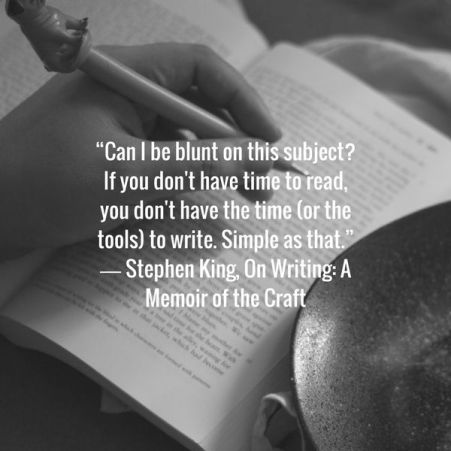
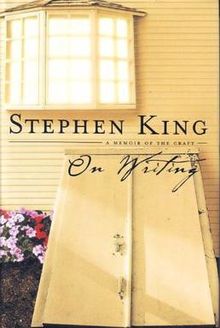
 I finally got around to reading ON WRITING: A MEMOIR OF THE CRAFT, Stephen King’s book that every writer should read. Since he reportedly earned 17 million last year, he must know a few things about writing. Plus there are over 350 million copies of his dozens of books in existence. He has such an easy conversational writing style, and I completely enjoyed the book, written partly while he was recovering from a horrific car accident. I took notes while reading, and thought I’d share them here (in case you don’t have time to read the book):
” …the reader must always be your main concern; without Constant Reader, you are just a voice quacking in the void.” (Constant Reader being the person you imagine being the perfect reader of your book)
“The adverb is not your friend.”
“The object of fiction isn’t grammatical correctness but to make the reader welcome and then tell a story … to make him/her forget, whenever possible, that he/she is reading a story at all.” (Love this advice)
“Every book you pick up has its own lesson or lessons, and quite often the bad books have more to teach than the good ones.” (on using other people’s books as learning tools)
“Good writing, on the other hand, teaches the learning writer about style, graceful narration, plot development, the creation of believable characters, and truth-telling.”
“Plot is, I think, the good writer’s last resort and the dullard’s first choice. The story which results from it is apt to feel artificial and labored.” (made me think of , and how much I dislike obvious authorial contortions of a story’s events (which don’t feel organic to the story/characters).
“Description begins in the writer’s imagination, but should finish in the reader’s. … For me, good description usually consists of a few well-chosen details that will stand for everything else. … it’s as easy to over-describe as to under-describe. Probably easier.”
“The key to good description begins with clear seeing and ends with clear writing, the kind of writing that employs fresh images and simple vocabulary.”
“And if you do your job, your characters will come to life and start doing stuff on their own. I know that sounds a little creepy if you haven’t actually experienced it, but it’s terrific fun when it happens. And it will solve a lot of your problems, believe me.” (this is so true, and so difficult to explain, but wonderful when it happens!)
“With the door shut, downloading what’s in my head directly to the page, I write as fast as I can and still remain comfortable. Writing fiction, especially a long work of fiction, can be a difficult, lonely job; it’s like crossing the Atlantic Ocean in a bathtub. There’s plenty of opportunity for self-doubt.”
“The scariest moment is always just before you start. After that, things can only get better.”
“Writing is magic, as much the water of life as any other creative art. The water is free. So drink. Drink and be filled up.”
Hope you’re filling up on all things creative as we all await spring and vaccinations. Thanks for reading!
Jan

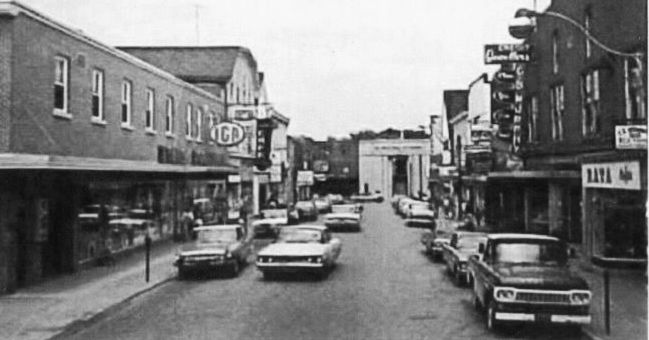 Tanks full of innocent goldfish, waiting to be bagged up and taken home to a guaranteed short life; the lunch counters with their super-salty gravy-soaked french-fries, milkshakes, and cherry cokes. And, of course the toys. We had so few in those days, making do with our dolls and our imaginations – my sister and I were never hard-pressed to find something fun to do. We played endless games of store, library, school, and house. We didn’t even have TV at home until the middle of elementary school, but we always had library books. I figure that’s a big part of why I grew up to become a writer.
 and I was sad to see so many empty storefronts on Kingston’s busy main street, Princess. University towns and cities are missing the annual September in-flow of students. Driving through other small towns in southern Ontario, the economic effects of this pandemic are bleakly visible in the “For Lease” signs in empty shop windows.
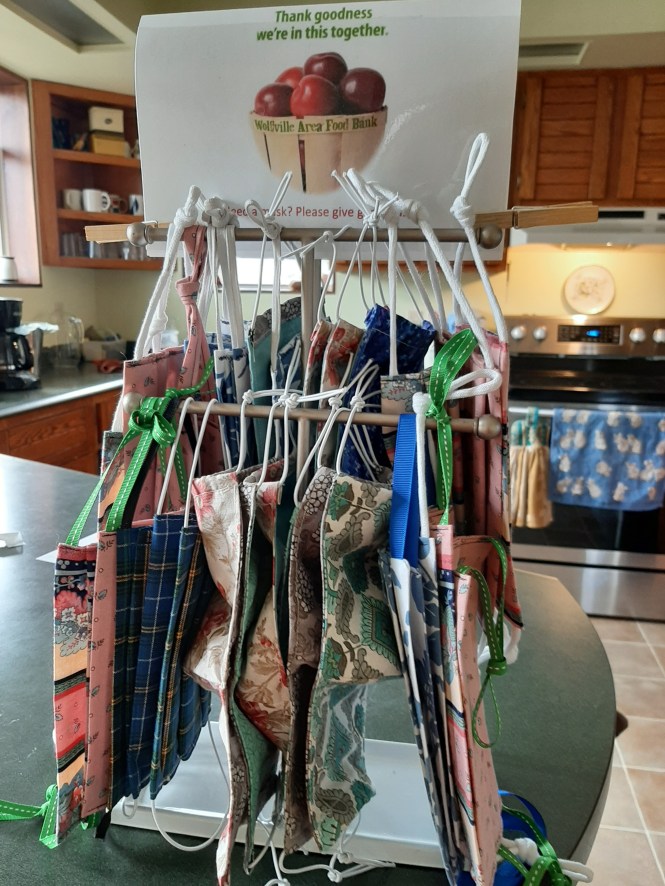
 including these lovely sea-inspired ones worn by my writing retreat pals, raising thousands of dollars for local food banks and school backpack programs. The latter (facilitated by the St. Vincent de Paul Society in Wolfville) is even more important now that Nova Scotia is reopening schools at full capacity in September. Masks are now mandatory in all indoor public places in Nova Scotia, and people are being super-compliant. We’ve been pretty much Covid-free for several weeks now, although that will change once all the interior Canadian borders reopen – date TBA, and people start flying around the country more often. I’m really getting frustrated by not seeing Liam & Rachel, Shannon & Peter (and sweet puppy Winnie)