Readers’ Digest version of Vonnegut’s Fiction-Writing Advice, and Bailey…

I love when Facebook friends post nuggets of wisdom – Kurt Vonnegut’s advice for short story writers came to me via FB this week, (http://www.youtube.com/watch?v=VyQ1wEBx1V0) and I thought I’d condense it for future reference.  It’s been amazingly helpful as I work my way through a revision:  In brief:

1) don’t waste a perfect stranger’s time;

2) give readers at least one character to root for;

3) your characters must want something;

4) every sentence must either advance the action or reveal character in some way;

5) start as close to the end as possible;

6) be sadistic – give your characters trouble so readers can see what they’re made of;

7) write to please one person;

8) give as much information as possible as soon as possible (in case a cockroach should eat the last few pages before your reader gets there:)

I’m feeling pretty good about my revision, and I’ve found myself  constantly referring back to this advice as I plug away at it. Of course, there are a million other things that he could have included, I suppose, but I like succinct, and this advice is that!

My whole family is home for the first time since Christmas, so I’m looking forward to having the kids’ energy in the house for a couple of months until they go back to school in September, although the house is still too quiet after the passing of our beagle buddy, Bailey a month ago, at the age of 15.

She lives on, of course, in our memories, and bits and pieces of her have already popped up, and will continue to appear, in my writing, as she was unforgettable in all sorts of ways! We’ll be scattering some of her ashes around her look-out perch at Horseshoe Lake sometime this summer so she can continue to keep an eye on the squirrels who think the cottage belongs to them during the winter…

Atlantic Book Awards Night

Jacob and I will be heading down to Alderney Landing tonight for the Atlantic Book Awards.  I’m not at all expecting that HARE will win the Ann Connor Brimer Award, not that it wouldn’t be nice, but I’m looking forward to meeting some of Atlantic Canada’s literary luminaries.  The evening starts with a reception for the nominees and guests, followed by a silent auction, with the actual awards ceremony starting at 7:00 pm.

In looking ahead to the evening, I’ve been thinking about the book and its journey so far.  I guess I didn’t know what to expect before the book was published, but I’ve been pleasantly surprised at the recognition it’s received so far, both in Canada and in the US.  In no particular order:

  • starred Kirkus Review
  • USBBY Honor List of Outstanding International Books 2011
  • Sask. Young Readers Choice Awards nominee 2011 (SYRCA)
  • Ann Connor Brimer Award shortlist
  • National Silver Medal, IPPY, US Independent Publishers Award
  • Skipping Stones Honor List
  • Woozles Battle of the Books 2012 list  (both elementary and high school)
  • on the shelves of hundreds of libraries in Canada, US, Australia and New Zealand

What all this means is that through HARE, Jacob’s story has already reached a wide audience (I’m hoping it will continue to for years to come) and I hope the publicity will in various ways support his work with Wadeng Wings of Hope.  Which was, after all, the impetus  behind the book’s creation!  Thanks to everybody who took the time to read the book and tell other people about it. Cheers!

Are writers control freaks?

“Writing gives you the illusion of control, and then you realize it’s just an illusion, that people are going to bring their own stuff into it.”
David Sedaris

I haven’t read anything by David Sedaris yet, but I love this quote.  Sometimes I wonder if a lot of writers write because they like being in charge – the world they’re creating in their story is completely within their command. Personally, I like being in control, both of my real life, and my writing life, but sometimes that control can be elusive.  When I do school visits, I always tell kids I’m a writer because I’m very nosy.  I like to know things about people and what motivates them; if I don’t know something, I can always make up a story that answers my questions.  The idea that an author’s version of his/her own story can only completely exist within the author’s mind, because each reader brings individual experiences to the reading of the book, really made me stop and think. Maybe authors have less control than they think!  Food for thought…

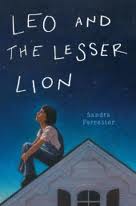
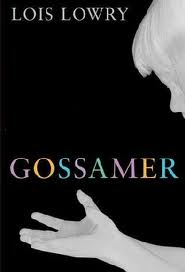
I’ve been reading lots of middle grade books lately.  Gossamer, by Lois Lowry, is fascinating and the type of book I’d never be able to write.  In this book, she explores dreams and nightmares in her usual incredibly imaginative way. Just finished Leo and the Lesser Lion, by Sandra Forrester – it’s set during the Depression and has the kind of characters you get to know intimately; people you  continue to think about after you’ve finished the book.  Also read Neil Armstrong is My Uncle by Nan Marino which is set in 1969 and also has 3D characters who seem like real people. One of the main characters is nicknamed Muscle Man McGinty – this book made me laugh out loud in parts, but it’s also poignant and insightful. When I visit schools, I tell kids that, to me, reading is the most essential part of being a writer which usually seems to surprise them.


Atlantic Books Today – Atlantic Book Awards Nominee(s)

Ann Connor Brimer Award for Children’s Literature

Jan L. Coates, A Hare in the Elephant’s Trunk (Red Deer Press)

How does it feel to be nominated?
I’m honoured and grateful, and hopeful the recognition will enable Hare to provide further support for Wadeng Wings of Hope and the important work Jacob is doing in Sudan.
In 140 characters or less (a la Twitter) tell us what your nominated book is about: 
Inspired by the childhood of Jacob Akech Deng, SMU graduate and former Lost Boy of Sudan, this novel is about an extraordinary journey of courage, perseverance and hope.
 
Who or what is your major influence when writing? 
Other writers for young people, whose books I read and analyze in attempting to figure out what makes them so good.
What compelled you to become a writer?
My mother owned a bookstore in Truro for twenty-five years, and I grew up immersed in the world of books, but it was really sharing books with my own kids that made me decide to try writing for young people.
 
Of all living and deceased authors, who would you like to meet and why? 
John Irving, because my writing life would be complete if he could just share a few choice secrets to help me write a book like Owen Meany.
Briefly share 3 things about yourself that we don’t know: 
1) Inside, I’m still twelve years old.
2) I’m scared of water.
3) I want to live in France someday.

REAL WAR vs. VIRTUAL WAR

I had an amazing “teachable” moment last week during a book talk with students.  I read a short passage from HARE, and the students were really interested. They had lots of questions, but the one that almost left me speechless was this: “So, when the war came, did the huts all get blown up and burned – like,  totally destroyed?” I said, “Yes. With grass roofs, they would burn very quickly.  Why?”  To which the student responded, “Oh, that’s what happens in this game – Call of Duty (I think that was the name) Everything gets burned right to the ground.”

I seized the moment and we had a thoughtful chat about what a child like young Jacob, struggling to survive during a real war,  might think to see young people playing a virtual war game with many similarities to that child’s daily life.  I hope our discussion might make some of the kids in that class think twice the next time they’re involved in playing a virtual war game. Even better, maybe some of them will read HARE, or other books about kids living in crisis, and broaden their understanding of the world and come to realize that war is no game.

As a side note, I had another student tell me today that he couldn’t remember ever having watched a movie without violence! Isn’t there enough real violence everywhere in the world that kids don’t have to be exposed to it in movies and on TV on a regular basis? As entertainment? Yikes!

Shortlisted for an Atlantic Book Award:)

I had a chance to listen in on a writerly conversation between Linden MacIntyre, Sheree Fitch, Alexander MacLeod and Sheldon Currie the other night. The occasion was a fundraiser for the Atlantic Book Awards, and Jacob and I (and Shannon) were there because HARE has been shortlisted for the Ann Connor Brimer Award for Children’s Literature (along with The City Speaks in Drums, by  Shauntay Grant and Glory Wind by Valerie Sherrard). The ABA and Atlantic Book Week (May 12-19) are largely organized by volunteers, and I really appreciate the hard work they do to promote Atlantic Canadian books and writers.  I’m looking forward to participating in some readings during the week, as well as spreading some increased awareness of Jacob’s work with Wadeng Wings of Hope.

The cool thing about being able to eavesdrop on the aforementioned conversation was hearing these seasoned writers discuss some of the very same things I struggle with on a daily basis in my word-wrestling life. In particular, it was interesting to hear their tales of where their stories have come from.  Sheree said a couple of things that truly amazed me: a) she can’t type and writes longhand! and b) one of her novels took her 8 years to complete, and another took 5 years!  I spent about 3 years on HARE, and I’m not sure if I could summon that kind of patience and perseverance!

Speaking of patience, I’ve gotta get back to my W.I.P.  Kathy Stinson told me recently that she knows a manuscript is finished when she can’t stand to be in the room with it for another minute.  I haven’t quite gotten to that point, but I’m getting close – as I prepare to read through it for about the 500th time!  Salud! (Dominican for Cheers!)

http://www.atlanticbookawards.ca/Content/2011_shortlist

The Willow Awards – 2011/12

Willow Awards

I found out a few weeks ago that A Hare in the Elephant’s Trunk has been nominated for a Snow Willow Award, as sponsored by SYRCA (Saskatchewan Young Readers Choice Awards). This means it’s part of a list of ten books that middle school readers can read, then vote for, over the next year or so (provided they’ve read at least three of the books on the list).  I’ve decided to try and read the other nine nominated books to size up the competition, so to speak:)  I love the idea of readers’ choice awards, and I’m pretty happy with the nomination! I have an aunt and uncle who live in Saskatchewan; maybe some of their grandchildren will participate!

I’m not sure how many provinces have such a program. Nova Scotia has the Hackmatack Awards, but I believe they involve books for readers 12 and under.  I know Ontario has a similar program, but I don’t know much about it.  I think SYRCA is completely run by volunteers, which is quite a feat as they apparently had 11,000 voters involved in the Willow Awards last year.  It sounds like they’re really going to work to promote the nominated books as they’ve asked for links to any book trailers or websites authors may have, as well as suggesting authors might like to create a podcast readers could watch.  Last year, I learned how to make a book trailer and a writing PowerPoint; guess this year it’ll be a podcast.  Sounds like fun, but I’m not sure if I have the necessary technology on hand.  I might have to put out a plea for technical assistance.  Normally, son Liam would provide that assistance, but since he’s in the UK, I’ll have to look elsewhere.  Of course, there’s always Google…

Book Travels

I’ve been thinking lately about how the world is constantly shrinking, figuratively at least.  Son Liam is in Bath, UK studying this term and sounds like he’ll have lots of opportunity to travel throughout Europe, thanks to lots of free time and cheap flights.  When I was his age, a trip to Europe was a HUGE deal; not so much these days.

A Hare in the Elephant’s Trunk was released in the US on Feb. 1st, and it’s already well-traveled throughout the US.  Thanks to a site called WorldCat, you can track your book’s travels (at least to libraries that have their collections registered with the site.)  This morning, I found HARE in libraries in Wisconsin, California, Iowa, Colorado, North Carolina, Washington, Massachusetts, New York, Utah, Mississippi and Oregon. It’s also in libraries in all Canadian provinces by now, I think.  Before Rainbows in the Dark was published in 2005, I had no idea how far it would travel – all around the world in a few different languages!

I’m working on my tenth chapter book for JLS, a Korean English language school with an office in British Columbia – some of the books have my name as author; others have my pen names: Ada Pearson and Lynn Mingo.

The first of my JLS books

The entire curriculum in JLS schools is based on story – I love the idea that Korean children are using my books to learn English!♥

Before its release south of the border, HARE got some great publicity by receiving a starred Kirkus review and also being named to the 2011 USBBY Honor List of Outstanding International Books (this list was announced at the huge ALA conference in California in January). I’ve just finished writing an educator’s guide for HARE (it will soon be free to download from the Fitzhenry & Whiteside website) – hopefully some teachers somewhere will find it useful.  I’ve found out recently about two other awards HARE’s been nominated/short-listed for, but they haven’t been announced yet. Red Deer Press will be taking it to the Bologna  Children’s Book Fair in March, in hopes of selling some foreign rights.  Unfortunately, I don’t get to tag along…Bon Voyage!

CHILDREN’S WRITER Newsletter – Kindergarten Contest

If you’re looking for a writing challenge for February, Children’s Writer has a contest for you – write a 150-word story for a beginning kindergarten reader, age 5 or 6, on the subject of family or school life. Here’s the link:
http://www.thechildrenswriter.com/af627/

I’ve entered these competitions before; they’re free for subscribers to Children’s Writer– I haven’t won, but sometimes it’s nice to have a concrete writing goal – and hey, how hard can it be to write 150 words? Kidding – writing 150 words for a primary student to read independently is tough! The story still has to have a beginning, middle and end, conflict, character development, setting, etc. – but be less than one double-spaced page!! I’ve been working on 1000-word English as a Second Language manuscripts lately, and I find it super hard to pack an entire story, in relatively simple language, into 1000 words.

Deadline for the contest is February 28th, and you can submit via mail or online. Good luck!

Books + Libraries + Children = A Better World

But what a gift to give a child, this chance to discover that you can love a book and the characters in it, you can become their friend and share their adventures in your own imagination. This is a quote from children’s writer, Philip Pullman, part of a speech he gave recently regarding proposed library cuts in the UK. I spent three days this week with the students of New Minas Elementary School (all 300+ of them!), and it was wonderful to see that books do still matter to kids, despite all the competition from technology. The students were interested, helpful, friendly and attentive during my presentations. From Lacey who drew me a pig and told me that 50 isn’t old, to all the students who made me laugh, to the primary students who randomly hugged me in the halls, it was all good; the staff members of NMES work incredibly hard to provide a warm learning environment for their kids, and they’ve grown an excellent school as a result of their efforts. Huge thanks to Sheila, Jenn and everybody at New Minas Elementary for hosting my three-day visit!